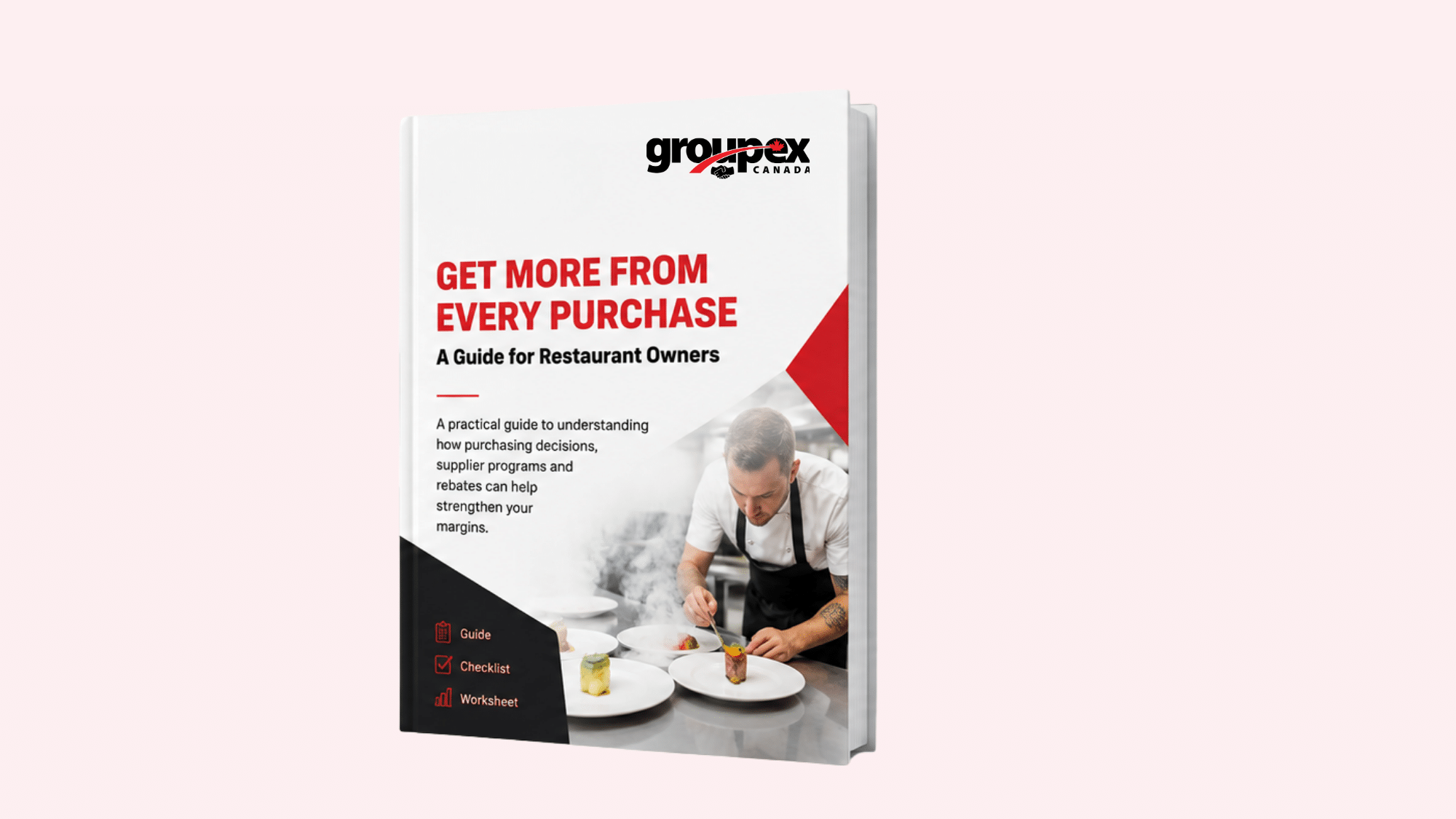


Foodservice operators are heading into 2027 facing a familiar mix of challenges: rising costs, ongoing supply-chain volatility, and rapid advances in procurement technology.
In this environment, purchasing has become a strategic business function. Group Purchasing Organizations (GPOs) have evolved from simple “discount clubs” into trusted procurement partners. They help businesses control costs, reduce risk, and make smarter buying decisions.
The operators that thrive this year won’t necessarily be the ones with the biggest budgets or the largest purchasing teams.
They’ll be the ones who make faster, more informed procurement decisions, build resilient supplier relationships, and find ways to stretch every purchasing dollar without compromising quality or service. That’s exactly where a modern foodservice GPO creates value.
Quick answer: A Group Purchasing Organization (GPO) combines the purchasing power of multiple businesses to negotiate better supplier pricing, rebates, and contract terms than members could typically secure on their own.
In 2026, GPOs matter more than ever because they help foodservice operators navigate inflation, supplier disruptions, and increasingly complex procurement decisions while improving efficiency, strengthening supplier networks, and protecting margins.
What Is a GPO?
Every foodservice business purchases hundreds, sometimes thousands, of products throughout the year.
This includes food ingredients, beverages, cleaning chemicals, kitchen equipment, disposables, uniforms, smallwares, maintenance supplies, and countless other items, all of which require careful sourcing.
Buying each category independently takes time, negotiating leverage, and market expertise. A Group Purchasing Organization (GPO) simplifies this process.
Rather than negotiating supplier contracts on behalf of a single restaurant or hospitality business, a GPO represents hundreds or even thousands of members.
By consolidating purchasing volume, the organization negotiates preferred pricing, rebate programs, and supplier agreements that benefit every member.
For operators, this means gaining access to pricing and supplier relationships that would normally be available only to much larger organizations.
Today’s hospitality GPOs do considerably more than negotiate discounts.
Many also provide:
- Procurement guidance
- Supplier vetting
- Contract management
- Market insights
- Purchasing analytics
And all of that helps businesses make better decisions over time.
GPO vs. Traditional Purchasing: What’s the Difference?
Traditional purchasing places the entire responsibility on the individual business. Operators research suppliers, negotiate contracts, monitor pricing, evaluate product quality, and react when disruptions occur.
A GPO changes that dynamic. Instead of negotiating alone, members benefit from established supplier agreements backed by collective purchasing volume.
Rather than constantly searching for alternatives when markets shift, operators gain access to trusted supplier networks and procurement expertise that help them adapt more quickly. The result is often lower costs, less administrative work, and greater purchasing confidence.
How Has Procurement Changed Heading Into 2026?
Procurement used to be transactional: find the lowest unit price, place the order, repeat. That model is breaking down.
Heading into 2027, operators are dealing with a mix of pressures that traditional purchasing wasn’t designed to handle.
This includes persistent cost inflation and suppliers that can disappear or change terms overnight. There’s also a growing expectation that purchasing decisions account for risk, sustainability, and long-term supplier reliability, not just price per case.
At the same time, technology has raised the bar. AI-powered forecasting, dynamic pricing tools, and data-driven supplier scoring are becoming standard practice among larger operators and distributors.
This means procurement is no longer just about relationships and negotiation. It’s about who has better data.
Independent operators, who rarely have a dedicated procurement team, are being asked to compete in an environment built for enterprise-level resources.
The Top Procurement Trends Shaping 2026
The procurement landscape is evolving faster than many operators anticipated. Economic uncertainty, rapid advances in technology, and changing customer expectations are reshaping how businesses source products and manage supplier relationships.
The latest trends in procurement all point to the same conclusion: success no longer comes from finding the lowest price alone. It comes from building a procurement strategy that is resilient, data-driven, and adaptable.
Here are the procurement industry trends that will have the biggest impact on foodservice businesses in 2026.
Rising Food Costs and Margin Pressure
Protein, cooking oil, and utility costs have all risen sharply over the past year, and margins that were already thin are getting thinner.
For many operators, the difference between a profitable month and a break-even one now comes down to fractions of a percentage point on food cost.
That makes every supplier contract, every rebate, and every negotiated discount materially important. It’s not just a bonus but part of how the business stays solvent.
Supply-Chain Volatility and Supplier Risk Management
Weather events, shipping disruptions, and shifting trade policy continue to create real risk for foodservice supply chains.
Everstream Analytics’ 2026 Annual Supply Chain Risk Report ranks extreme weather as the second-biggest threat to global supply chains this year, behind only geopolitical fragmentation. At the same time, shifting trade policy is pushing many industries toward shorter, more regional supply chains.
For a restaurant or hotel, that can mean a key ingredient becomes unavailable or jumps in price with almost no warning. Operators who rely on a single supplier for critical items are the most exposed.
AI and Data-Driven Purchasing Intelligence
Procurement is becoming a data discipline. Distributors and large operators are using AI to forecast demand, flag pricing anomalies, and vet new suppliers faster than ever, and adoption is accelerating quickly across the industry.
That shift is real, but most independent operators don’t have the systems, the data, or the time to build this kind of intelligence in-house — creating a growing competitive gap between large chains and small operators.
Supplier Diversification Over Single-Source Buying
“Don’t put all your eggs in one basket” has become a genuine procurement strategy rather than a cliché.
More foodservice buyers are qualifying backup suppliers for critical ingredients and building flexibility into their sourcing so a single disruption doesn’t take down the whole menu.
Multi-sourcing takes time and relationships that most independent operators don’t have room to build alone.
Sustainability and Local Sourcing Expectations
Guests, especially younger diners, increasingly want to know where their food comes from, and “local” and “sustainable” have moved from marketing buzzwords to genuine purchasing criteria.
Operators are under more pressure to source responsibly without blowing up their food costs in the process. It’s a balancing act that’s much easier with a supplier network that’s already been vetted.
The Shift From Transactional Buying to Strategic Partnerships
Maybe the biggest shift of all: procurement is moving away from “who’s cheapest today” and toward “who can I count on this year.”
Operators are prioritizing consistency, communication, and long-term supplier relationships over chasing the lowest price on every single order. That’s primarily because constantly switching suppliers to save a few cents ends up costing more in wasted time, inconsistent product, and menu disruption.
Why Do GPOs Matter More Than Ever in 2026?
Every procurement challenge discussed above shares one common theme: Businesses must accomplish more with limited resources.
Independent restaurants, hospitality groups, healthcare foodservice providers, educational institutions, and corporate dining operations often don’t have large procurement departments analyzing supplier markets every day.
A GPO effectively extends those capabilities. Instead of hiring additional purchasing specialists, members gain access to negotiated contracts, supplier expertise, procurement support, rebate opportunities, and industry knowledge through a single partnership.
That allows operators to focus on what they do best, while purchasing becomes more efficient, resilient, and strategic.
What Does a Foodservice GPO Actually Do for Operators?
Many operators understand what a GPO is, but not necessarily everything it can do. While negotiated pricing remains one of the biggest advantages of GPO purchasing, today’s foodservice GPOs provide far more than access to discounts.
They help businesses simplify procurement, strengthen supplier relationships, uncover new savings opportunities, and reduce the administrative burden on already busy teams. Here’s a closer look at the services that deliver the greatest value.
Negotiated Supplier Pricing
The most visible benefit remains negotiated pricing. By combining purchasing volume across many members, buying groups often secure contract pricing that individual businesses would struggle to negotiate independently.
The savings can extend across food products, equipment, supplies, maintenance services, uniforms, chemicals, and many other purchasing categories.
Rebates and Cost Recovery Programs
Many supplier agreements include rebate programs that return additional value to participating members.
Instead of simply lowering invoice prices, these programs help businesses recover purchasing dollars throughout the year, improving overall procurement performance.
Access to Trusted Supplier Networks
Finding reliable suppliers requires significant time and research.
Established GPOs continuously evaluate supplier performance, helping members connect with vendors that consistently deliver quality products and dependable service. This reduces procurement risk while saving valuable management time.
Purchasing Support Without Adding Internal Resources
One of the most overlooked benefits of GPO purchasing is operational efficiency. Purchasing managers, chefs, finance teams, and owners already juggle numerous responsibilities.
Working with a procurement partner provides additional expertise without increasing payroll or expanding internal procurement departments.
How Much Can Independent Operators Save With a GPO?
The answer varies depending on purchasing volume, supplier mix, and current contracts. Businesses with limited negotiating power often discover savings across multiple categories rather than through one dramatic discount.
These savings may come from:
- Lower contract pricing
- Supplier rebates
- Reduced administrative time
- Fewer purchasing errors
- Improved contract compliance
- Stronger supplier performance
- Less disruption during supply shortages
Over time, these combined efficiencies can have a meaningful impact on profitability while making procurement significantly easier to manage.
How Do You Choose the Right GPO for Your Business?
Not all GPOs are created equal, and choosing the wrong one can mean losing flexibility without gaining meaningful savings. A few things worth evaluating:
Supplier overlap. Does the GPO’s approved network actually cover the products your business already buys, or will you constantly be shopping outside the program?
Market focus. A GPO built for the U.S. market will have supplier contracts and logistics networks shaped around American operations. Canadian operators need a GPO with genuine roots and infrastructure here.
Ownership and fee structure. Some GPOs are for-profit and pay out to shareholders; others reinvest proceeds back into the industries they serve. Understanding how a GPO makes money helps you gauge how much value actually flows back to members.
Support model. A GPO that assigns a real, dedicated consultant tends to deliver more consistent savings than one that leaves members to navigate a supplier catalog alone.
Long-term fit. The best GPO for your business is one built to grow alongside it: supporting new locations, changing menus, and evolving purchasing needs, not just today’s order.
You can dig deeper into this comparison, including a full breakdown of GPO versus buying direct, before making a decision.
Ready to Turn 2026 Procurement Pressure Into an Advantage?
Every trend shaping 2026, from rising costs and supply-chain risk to AI-driven purchasing, supplier diversification, and sustainability pressure, points toward the same solution: independent operators need the scale, data, and supplier relationships that a strong GPO provides.
Groupex has spent over four decades building exactly that for Canadian foodservice, with a network of 300+ supplier partners and billions in combined purchasing power reinvested back into the industry it serves.
See which Groupex program fits your business and start turning 2026’s procurement pressure into an advantage.
FAQs
What is the difference between a GPO and a buying group?
In the foodservice industry, the terms are largely interchangeable. Both describe an organization that pools the purchasing power of multiple businesses to negotiate better pricing, rebates, and supplier terms than any single operator could get alone.
How do GPOs save businesses money?
Primarily through two channels: negotiated pricing that reflects the group’s combined order volume, and rebate programs that return cash or credit on purchases members are already making. Many GPOs also help reduce hidden costs by giving members access to a vetted, reliable supplier network.
Can independent restaurants join a GPO?
Yes. Independent operators are exactly who GPOs are built for. Small and mid-sized businesses typically benefit the most, since they gain access to volume-based pricing they couldn’t secure on their own.
Do GPO members have to buy exclusively through the group?
Not necessarily, and this varies by GPO. Reputable GPOs are transparent about whether there are purchase minimums or exclusivity requirements. It’s worth confirming this before joining, so you know exactly how it will affect your outside purchasing flexibility.